How AI-Driven Cybersecurity Advances Are Shaping the Future

In today’s digital world, cybersecurity is more critical than ever. Threats evolve quickly, and traditional defenses often struggle to keep up. Enter artificial intelligence (AI) - a game-changer in the fight against cybercrime. AI-driven cybersecurity advances are transforming how organizations protect their data, networks, and systems. This post explores the key ways AI is reshaping cybersecurity, offering practical insights and examples for business and technology leaders.
The Rise of AI in Cybersecurity
Cybersecurity has always been a cat-and-mouse game. Hackers develop new tactics, and defenders respond with updated tools. But the pace of attacks has accelerated dramatically. AI helps level the playing field by automating threat detection and response. It can analyze vast amounts of data faster than any human team, spotting patterns and anomalies that indicate a breach.
For example, AI-powered systems can monitor network traffic in real time. They learn what normal behavior looks like and flag anything unusual. This proactive approach helps catch threats before they cause damage. AI also reduces false positives, so security teams can focus on real risks instead of chasing shadows.

Key AI-Driven Cybersecurity Advances
Several AI technologies are driving major improvements in cybersecurity:
Machine Learning (ML): ML algorithms learn from data to identify malware, phishing attempts, and other threats. They improve over time, adapting to new attack methods.
Behavioral Analytics: AI tracks user and device behavior to detect insider threats or compromised accounts.
Automated Incident Response: AI can trigger automatic actions like isolating infected devices or blocking suspicious IP addresses.
Threat Intelligence: AI aggregates and analyzes global threat data to predict emerging risks.
Natural Language Processing (NLP): NLP helps analyze unstructured data such as emails or chat logs to detect social engineering attacks.
These advances enable faster, smarter, and more scalable cybersecurity defenses. They also free up human experts to focus on strategic tasks rather than routine monitoring.
Practical Examples of AI in Action
Let’s look at some real-world applications of AI in cybersecurity:
Phishing Detection: AI scans incoming emails for signs of phishing, such as suspicious links or language patterns. It can quarantine risky messages before they reach employees.
Malware Identification: AI models analyze file behavior and code to detect new malware variants that traditional signature-based tools might miss.
Fraud Prevention: Financial institutions use AI to monitor transactions and flag unusual activity that could indicate fraud.
Vulnerability Management: AI helps prioritize patching by predicting which vulnerabilities are most likely to be exploited.
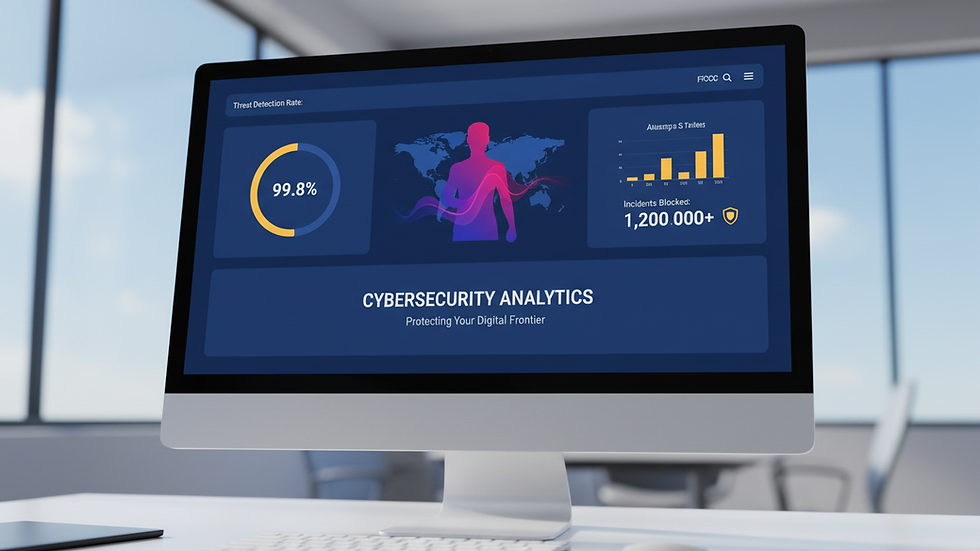
Security Operations Centers (SOCs): AI-powered dashboards provide analysts with real-time insights and recommendations, speeding up incident resolution.
These examples show how AI enhances every stage of the cybersecurity lifecycle, from prevention to detection and response.
Challenges and Considerations
While AI offers powerful benefits, it’s not a silver bullet. Organizations must address several challenges to maximize its impact:
Data Quality: AI depends on high-quality data. Poor or biased data can lead to inaccurate results.
Complexity: Implementing AI solutions requires skilled personnel and integration with existing systems.
Adversarial Attacks: Hackers are developing ways to fool AI models, such as feeding them misleading data.
Privacy Concerns: AI systems must comply with data protection regulations and respect user privacy.
Cost: Advanced AI tools can be expensive, especially for smaller organizations.
To overcome these hurdles, businesses should adopt a layered security approach. Combine AI with human expertise, continuous training, and robust policies. Regularly evaluate AI models and update them to stay ahead of evolving threats.
Looking Ahead: The Future of AI and Cybersecurity
The future of cybersecurity will be deeply intertwined with AI. Emerging trends include:
Explainable AI: Making AI decisions transparent to build trust and improve human-AI collaboration.
AI-Driven Threat Hunting: Proactively searching for hidden threats using AI insights.
Integration with Cloud Security: Leveraging AI to secure increasingly complex cloud environments.
Zero Trust Architectures: Using AI to enforce strict access controls based on continuous risk assessment.
AI-Powered Cybersecurity Training: Personalized training programs that adapt to employee behavior and knowledge gaps.
Staying informed about these developments is essential for leaders who want to protect their organizations effectively.
For those interested in a deeper dive, check out this resource on how ai is changing cybersecurity.
Embracing AI for Stronger Cybersecurity Posture
Adopting AI-driven cybersecurity advances is no longer optional. It’s a necessity for organizations aiming to defend against sophisticated cyber threats. By leveraging AI, businesses can:
Detect threats faster and more accurately
Automate routine security tasks
Enhance decision-making with data-driven insights
Reduce operational costs and improve efficiency
Strengthen overall resilience against attacks
The key is to start small, pilot AI tools, and scale gradually. Invest in training your security teams to work alongside AI systems. And always keep human judgment at the center of your cybersecurity strategy.
AI is transforming cybersecurity in exciting ways. Those who embrace these changes will be better equipped to protect their digital assets and maintain trust in an increasingly connected world.


Comments